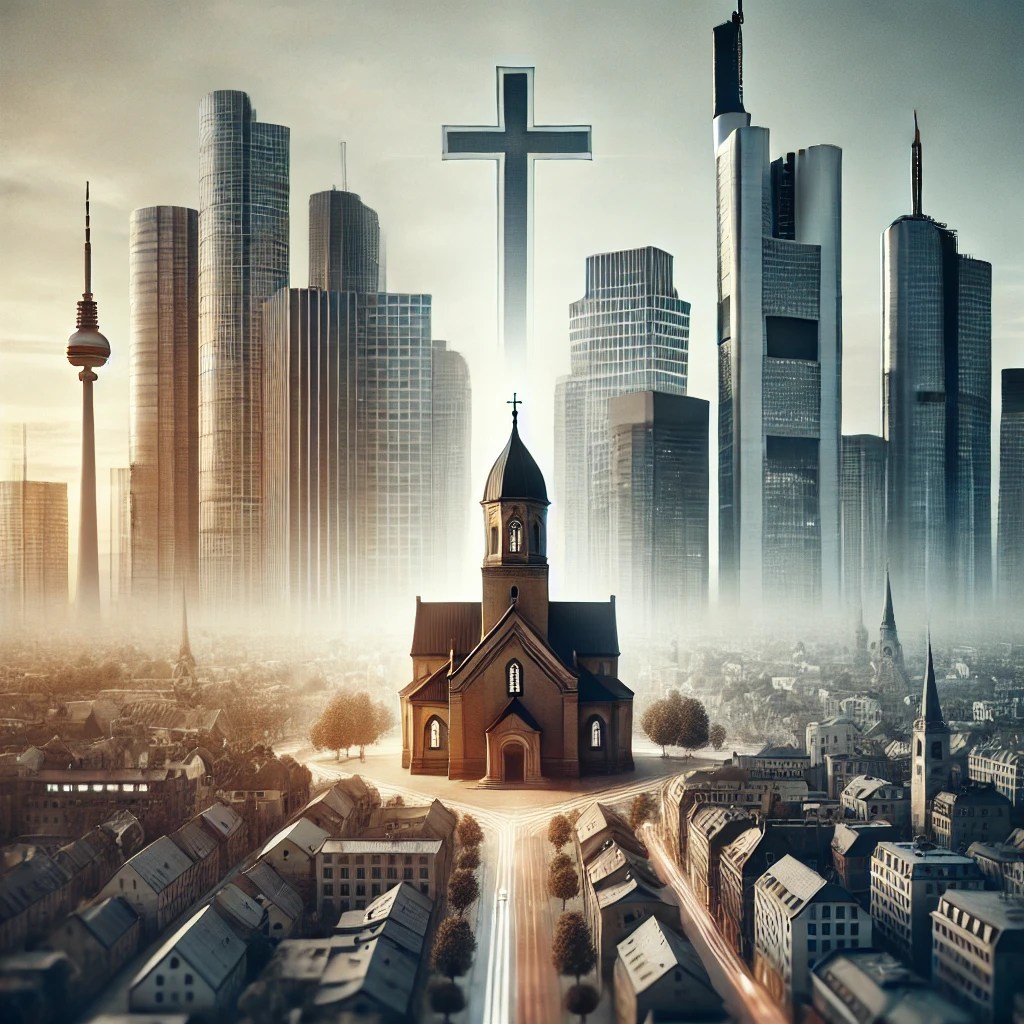
In the modern West, headlines regularly proclaim the “death of religion.” Pew Research, Gallup, and Barna surveys track the rising number of “nones”—those who identify with no religion. Church attendance has declined. Traditional doctrines are questioned. Even among professing believers, the enthusiasm for orthodoxy seems to be waning.
But is religion really dying?
Or is it evolving?
Let’s explore.
📉 The Decline of Traditional Religion
There’s no denying the numbers: in places like the U.S., Canada, and Europe, institutional religion is losing ground.
- Church attendance is at historic lows.
- Youth disaffiliation is accelerating.
- Seminary enrollments are shrinking.
- Pastoral burnout is surging.
Add to this the scandals, cover-ups, political entanglements, and doctrinal inflexibility that have left many questioning whether organized religion still serves the needs of real people in a real world.
But that’s only half the story.
🌱 The Rise of Spirituality and Hybrid Beliefs
While many are rejecting organized religion, they’re not rejecting meaning, purpose, or transcendence. In fact, millions are reimagining the spiritual quest on their own terms:
- Mindfulness and meditation (often stripped of religious roots) are booming.
- Spiritual-but-not-religious (SBNR) identifiers have exploded.
- Interest in ancient wisdom, psychedelics, astrology, and Eastern philosophies continues to grow.
- Interfaith dialogue, humanist communities, and progressive theologies are gaining traction.
What we’re witnessing may not be the death of religion, but the death of authoritarian, dogmatic religion—and the birth of something more human, flexible, and honest.
🧠 Evolution by Deconstruction
In biological terms, systems adapt or die. Religion is no different.
Many people today are going through faith deconstruction—not to destroy belief, but to evolve it. They are:
- Letting go of fear-based doctrines.
- Questioning literalist readings of ancient texts.
- Replacing inherited guilt with critical inquiry.
- Valuing ethics over orthodoxy.
- Embracing community without creeds.
In this light, religion isn’t vanishing. It’s molting.
And like any molting creature, it looks messy in the process—but the goal is renewal.
🔍 What This Means for the Future
Will some religions die? Yes. Particularly those that refuse to adapt.
But the deeper human longings—connection, mystery, morality, hope—will remain. So too will our attempts to name and nurture them. What’s changing is the form:
- Less hierarchy, more horizontal community.
- Less dogma, more dialogue.
- Less “you must believe,” more “let’s explore together.”
This is not a crisis. It’s a crossroads.
🧭 The God Question’s Invitation
We believe that belief should never require the suspension of thought.
That doubt is not the enemy of truth—but its companion.
And that religion, like every other human construct, must face the light of evidence, logic, and lived experience.
So ask yourself:
- Is your faith expanding your mind—or shutting it down?
- Is your spiritual community making room for questions—or punishing them?
- Are you clinging to certainty—or growing in wonder?
Whether religion dies or evolves may depend on how bravely we ask—and live—the questions that matter.

 God or Delusion?