These are not arguments, and they are not answers.
They are reflections written from inside the question—after certainty loosens, but before experience is reduced to belief or disbelief.
Each entry begins with curiosity rather than conclusion, attending to how authority, fear, and identity shape what we think, feel, and allow ourselves to question.
Nothing here is meant to persuade. Only to notice what becomes visible when the need for certainty softens, and attention remains.
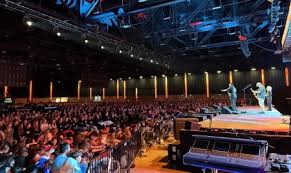
This week, thousands of students—including many from First Baptist Church Boaz—are gathered in Pigeon Forge for the Strength to Stand Conference.
The room is dark. The music is loud. Hands are raised. Voices are singing. Some are crying.
If you’re there, this probably feels powerful. Maybe even life-changing.
I know that feeling. I lived inside it as a teenager too.
This post isn’t written against you. It’s written for you—from someone who once stood exactly where you’re standing now.
The Experience Is Real
The Explanation Is the Question
Let’s start with something important:
Nothing about what you’re feeling is fake.
Emotion is real. Belonging is real. Unity is real. The rush is real.
The question isn’t whether something is happening.
The question is what explains it.
Because the exact same physical and emotional experience happens every weekend in places with no religious message at all:
- Packed football stadiums
- Concerts by secular artists
- Political rallies
- High-energy motivational events
People cry there too. People feel transformed there too. People swear, “This changed my life.”
Yet we don’t conclude that a football team is divine, or that a guitarist is altering reality.
So why do we reach a different conclusion here?
A Product You Can’t See—Yet You’re Asked to Commit Fully
Imagine any other area of life working this way.
You walk into a car dealership. The salesperson says:
“You can’t see the car. You can’t test drive it. You won’t experience it now. But trust us—it’s real. And if it doesn’t work, that’s on you.”
You’d walk out immediately.
In every other part of life, claims are demonstrated:
- You test the product
- You measure the results
- You evaluate the evidence
But here, the core promise is always:
- Later
- Someday
- After this life
- By faith
That doesn’t make it evil—but it should make you pause.
Emotion Is Not Evidence
This matters because emotion is easy to generate—especially in teenagers.
That’s not an insult. It’s neuroscience.
Your brain is wired right now for:
- Intensity
- Belonging
- Identity
- Meaning
- Approval
High-volume music, lighting, shared rituals, and authority figures speaking with confidence create powerful internal states. That’s not God-specific. That’s human-specific.
When someone tells you, “What you’re feeling is God,” they are interpreting the experience for you—not proving its source.
The Question Worth Asking—Quietly
Here’s a question you don’t need to answer out loud. Just hold it:
If the feeling I’m having can be created in many non-religious settings, how do I know what’s actually causing it?
Not:
- Is this meaningful?
- Is this emotional?
But:
- Is the explanation being given the only possible one?
That’s not rebellion. That’s thinking.
Why This Isn’t an Attack on Faith
You may have been told that questions like this are dangerous.
They aren’t.
A truth that can’t survive calm reflection—outside the lights, outside the music, outside the crowd—deserves to be examined.
If something is real, it doesn’t fear daylight.
One Final Thought—for When You’re Back Home
When the conference ends, the buses return, and life feels normal again, notice what remains.
Not the feeling. Not the high.
But the claims.
Ask yourself—gently, honestly:
- What exactly was promised?
- How would I know if it’s true?
- What would count as evidence?
- And would I accept this reasoning anywhere else in life?
You don’t have to abandon anything tonight.
Just don’t hand over your mind because something felt powerful.
Notes from inside the question aren’t answers. They’re invitations—to think, to notice, to pause.
And sometimes, pausing is the bravest thing you can do.
 God or Delusion?