The Problem of God’s Existence–(Chapter 2, Part 1): The Evidence of Morality?

📘 This post is part of a continuing response series to The Problem of God by Mark Clark. Each day, we examine one section of the book and critically respond using reason, clarity, and The God Question’s core philosophy: what’s true doesn’t fear investigation. Today’s entry addresses Chapter 2 (pp. 41–45), including the introductory setup and the first major argument: The Evidence of Morality.


🚲 The Setup: Personal Injury as Proof?

Clark begins with a story from childhood—being pulled on Rollerblades behind a bike, ignoring his mother’s warnings, and eventually getting injured. The lesson he draws? He didn’t believe her until he had evidence. He concludes this shows why he’s “always been that way.” A skeptic until shown otherwise.

But the story ironically undercuts the point he’s building toward.

He claims to be persuaded by evidence—yet the book itself isn’t offering scientific evidence for God. It offers apologetics. And as we’ll see below, his moral argument is built not on data or empirical support, but on intuition, anecdote, and assertion.


⚖️ The Moral Argument: C.S. Lewis in the Waiting Room

Clark’s first major claim in Chapter 2 is familiar: moral values prove God. He leans on C.S. Lewis (as many apologists do), citing Mere Christianity and the universal experience of people saying “That’s not fair!” as evidence that humans recognize some kind of absolute moral law.

He then adds layers:

  • Observations of his kids arguing about fairness.
  • A zoo encounter where strangers cut in line.
  • The idea that morality must come from a transcendent source—i.e., God.
  • Rejection of moral relativism as “logically bankrupt.”

But let’s examine this claim more closely.


❌ What Clark Gets Wrong About Morality

1. A shared sense of morality doesn’t require a supernatural source.

Clark assumes that because people share common moral instincts, they must be wired by a moral lawgiver. But that conclusion doesn’t follow. Evolutionary psychology explains these instincts well: empathy, fairness, loyalty, and justice evolved in social species to increase cooperation and survival. These adaptive behaviors became deeply embedded in our biology—not because a god wrote them into us, but because they worked.

2. He ignores the cross-cultural diversity of moral frameworks.

Clark cherry-picks examples where most modern people agree (“don’t cut in line”) but ignores where morality diverges—gender roles, caste systems, slavery, honor killings, child discipline, dietary laws, sexual taboos. These aren’t random differences—they reflect culture, geography, historical context, and social structures. If morality were truly “absolute” and God-given, wouldn’t we expect far more consistency?

3. He falsely equates moral feeling with moral fact.

Clark writes: “We feel like we should care… We know it’s wrong to drop napalm on babies…” But this is emotion—not evidence. Moral intuition is not moral ontology. Feeling that something is wrong doesn’t make it objectively so in a metaphysical sense. And if you define “objectivity” that broadly, you can make anything a pointer to God—from hunger to gravity.

4. He never addresses the Euthyphro dilemma.

This ancient critique—Is something good because God commands it, or does God command it because it is good?—goes unmentioned. It exposes the fatal circularity of grounding morality in God. If God is the source of morality, then “good” becomes whatever God says—even if it includes genocide, slavery, or eternal torture. But if morality is separate from God, then God is not its source—he merely affirms it.


🧠 The God Question Rebuttal

We don’t need to believe in an invisible being to explain why we say “that’s not fair.” We need only understand:

  • Our evolutionary past
  • Our social conditioning
  • Our empathy and tribal psychology
  • Our need for cooperation and group cohesion

Morality is a human construct rooted in our biology, shaped by our culture, and evolving alongside our societies. It’s not flawless, fixed, or universal—but it’s real. And it doesn’t require a moral lawgiver any more than language requires a divine linguist.

The question isn’t “How do we know right from wrong?”

It’s “What happens when we stop pretending that morality proves anything about God?”


A 5-minute animated video that explains the secular foundations of morality—and why goodness doesn’t need a god.


📚 Next Up: “What If They Ate Your Sister?”

Yes, that’s the actual title of the next section in The Problem of God, and yes—we’ll be responding to it next.
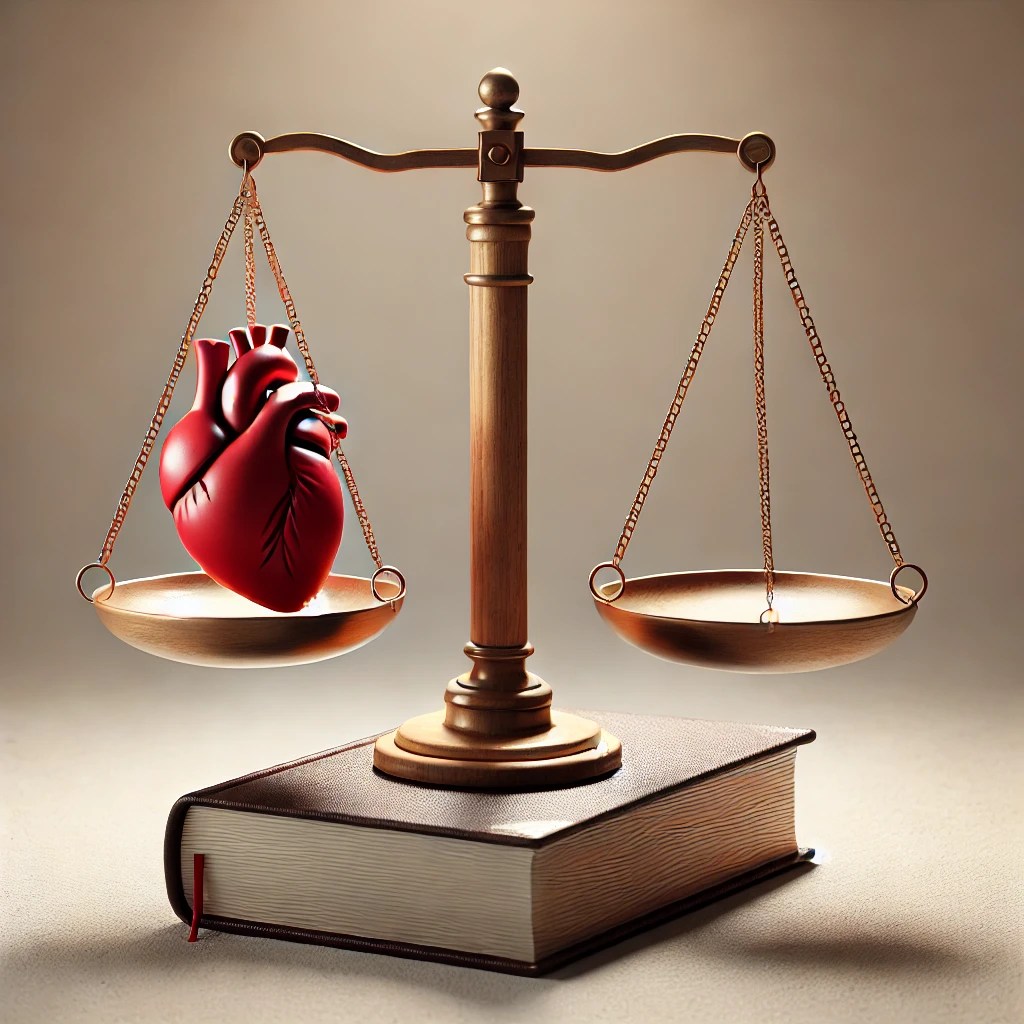

Does Morality Require God?

Welcome back to The God Question.

For centuries, religious believers have argued that morality is impossible without God—that without a divine being to dictate right from wrong, humans would have no ethical foundation. Some even claim that without God, morality becomes subjective, meaningless, or chaotic.

But is this true? Do we really need God to be moral?

Secular philosophers, scientists, and historians argue that morality is a product of human evolution, social cooperation, and reason—not divine command. If this is the case, then moral values can exist independently of religion, and we don’t need a supernatural authority to tell us what’s right and wrong.

So, who’s right? Let’s break it down.


1️⃣ The Religious Argument: No God, No Morality

Many believers hold that without God, morality collapses. This idea is often based on one (or both) of the following beliefs:

📌 The Divine Command Theory

🔹 Morality comes directly from God—what’s right is what God commands, and what’s wrong is what God forbids. 🔹 Without God, there would be no objective right or wrong—only personal opinions.

This belief is central to many religious traditions. For example:

✔ Christianity teaches that moral laws are derived from God’s nature and revealed through scripture (e.g., the Ten Commandments).

✔ Islam holds that Allah is the ultimate source of morality, and right and wrong are defined by the Quran and Hadith.

📌 The “Moral Chaos” Argument

🔹 Without God, morality would be subjective and meaningless.

🔹 If we decide morality for ourselves, then who’s to say murder or theft are wrong?

🔹 Atheism leads to moral relativism, where anything could be justified.

To many believers, the idea of a moral framework without God seems impossible—or even dangerous.

But does this argument hold up?


2️⃣ The Euthyphro Dilemma: A Major Problem for Divine Morality

The Euthyphro Dilemma, first posed by the Greek philosopher Plato, challenges the idea that morality depends on God. It asks:

📌 Does God command things because they are good, or are things good simply because God commands them?

If the first option is true (God commands what is already good), then morality exists independently of God—which means we don’t need Him to define it.

If the second option is true (morality is whatever God commands), then morality becomes arbitrary. God could declare murder, torture, or slavery to be “good”, and we’d have no way to challenge it.

🔹 Either morality exists independently of God, or it’s subjective to His whims.

🔹 Both options contradict the claim that God is the sole source of morality.


3️⃣ Can Atheists Be Moral?

A common claim by believers is that without God, atheists have no moral foundation and therefore cannot be truly good.

But is this true? Let’s look at the evidence:

Atheist-majority countries (like Sweden, Denmark, and Japan) have lower crime rates, higher social trust, and stronger human rights protections than many deeply religious nations.

Atheists and secular individuals are just as likely—if not more likely—to support values like fairness, compassion, and justice.

Secular ethical systems, such as humanism, emphasize morality without belief in the supernatural.

The data suggests that morality is not dependent on religion—people can and do act ethically without believing in God.


4️⃣ The Evolution of Morality: A Natural Explanation

If morality doesn’t come from God, where does it come from?

📌 Science offers a compelling answer: morality evolved as a social survival mechanism.

Human beings are social creatures. To thrive, early humans had to develop:

Empathy – Understanding and caring for others’ feelings.

Reciprocity – Treating others fairly so they treat you fairly in return.

Cooperation – Working together for mutual benefit.

These traits helped our ancestors form communities, trust one another, and survive. Over time, societies developed moral codes based on these instincts—not because of divine command, but because they worked.

Even animals display moral-like behavior:

Chimpanzees share food and console distressed companions.

Elephants grieve their dead.

Dolphins protect injured members of their pod.

This suggests that morality is rooted in biology and social cooperation, not religion.


5️⃣ Religious Morality Isn’t as “Objective” as Believers Claim

Believers often claim that religious morality is absolute and unchanging—but history proves otherwise.

Slavery was once justified by the Bible (Ephesians 6:5, Leviticus 25:44-46).

Women’s rights were long suppressed by religious doctrines.

Moral views on war, punishment, and sexuality have evolved drastically over time.

If morality came solely from God and was unchanging, why do religious moral values shift over time?

📌 In reality, morality evolves based on human reasoning and cultural progress.


6️⃣ Secular Morality: A Better Alternative?

If we don’t need God for morality, what do we base it on?

📌 Humanism offers a framework for secular morality, rooted in:

Compassion – Minimizing harm and suffering.

Reason – Making moral decisions based on evidence and consequences.

Autonomy – Respecting individual rights and freedoms.

Unlike religious morality, which often relies on ancient texts and authority, secular morality:

Adapts to new ethical challenges (e.g., human rights, medical ethics, technology).

Doesn’t rely on faith, but on reason, empathy, and evidence.

🔹 Being good doesn’t require belief in God—it requires care for others, ethical reasoning, and a commitment to fairness.


📌 Conclusion: Morality Exists Without God

We don’t need God to be moral. Morality arises naturally through evolution, social cooperation, and human reasoning.

The Euthyphro Dilemma challenges the idea that God is the source of morality.

Atheists and secular societies demonstrate strong moral values—often equal to or better than religious societies.

Religious moral codes have changed over time, proving they aren’t absolute.Secular morality, based on empathy and reason, provides a strong ethical foundation without supernatural beliefs.

📌 Bottom line: We don’t need divine commandments to be moral. We just need to care about each other.


📌 What to Read Next

📺 Why I Left Religion After 60 Years of Faith (My personal deconversion story and what led me to question my beliefs.)

📺 Does Prayer Really Work? (Analyzing whether prayer has real-world effects or is just confirmation bias.)

💡 What do you think? Can morality exist without God? Let’s discuss in the comments!