The God Question

Sustainable Ministry: A Response to July 10th

This is part of my year-long series exploring human-centered alternatives to the spiritual promises in Oswald Chambers’ classic devotional My Utmost for His Highest. Today’s entry, “The Spiritual Sluggard”, promises that believers can overcome “spiritual sluggishness” through community encouragement and “Christ-realization,” claiming that true spirituality involves actively engaging with life’s injustices and difficulties rather than retreating into prayer and Bible study for comfort.

Here’s what avoiding spiritual sluggishness through constant engagement actually delivered:


“Don’t retreat into comfortable Bible study,” his mentor warned firmly. “The test of your spirituality is engaging with injustice and turmoil. You need Christ-realization, not self-realization. Let others stir you up for spiritual activity.”

Pastor Michael felt increasingly drained by his congregation’s constant conflicts and complaints, but spiritual guidance demanded he push through rather than step back. Avoiding spiritual sluggishness meant staying engaged with every crisis, every criticism, every church conflict as opportunities for spiritual growth.

Michael forced himself to remain engaged despite growing exhaustion. When church members criticized his sermons, he saw it as spiritual testing. When board meetings devolved into personal attacks, he interpreted it as opportunity for Christ-realization. When families left over petty disagreements, he viewed it as a call to greater spiritual initiative.

For months, Michael avoided what Chambers called “spiritual sluggishness” by refusing to step back and assess the situation objectively. He didn’t seek counseling or take sabbatical time, viewing such self-care as spiritual retreat. He continued forcing himself into the “rough-and-tumble” of church conflict, believing this demonstrated authentic spirituality.

But the promised spiritual vitality was a devastating lie.

Instead of manifesting the life of Jesus Christ, Michael developed severe anxiety and depression. His marriage suffered as he brought constant stress home. His children began avoiding him because he was always irritable and overwhelmed. The spiritual engagement that was supposed to energize him was destroying his capacity to function.

Meanwhile, his friend Pastor Sarah approached ministry burnout with zero expectation of spiritual breakthroughs through constant engagement. When Sarah recognized signs of compassion fatigue, she didn’t interpret it as spiritual failure requiring more activity. She sought professional counseling, took a planned sabbatical, worked with her board to establish healthier boundaries.

Sarah’s approach included exactly what Chambers warned against—stepping back from immediate ministry demands to gain perspective and restore emotional resources. She used prayer and reflection not to stir herself up for more activity but to process experiences and regain balance.

When Michael finally collapsed from exhaustion and was hospitalized for stress-related symptoms, he realized his spiritual approach had been destroying rather than building his capacity for ministry.

Where was the Christ-realization that was supposed to energize him through difficult engagement? Where was the spiritual vitality that constant activity was meant to produce?

Sarah’s supposedly “sluggish” approach of self-care and professional boundaries had actually sustained her ability to serve others long-term while Michael’s spiritual engagement had burned him out completely.

The breakthrough came when Michael stopped interpreting self-care as spiritual failure and started treating ministry as sustainable work requiring rest, reflection, and professional development.

The silence where spiritual vitality was supposed to flow through constant engagement revealed the truth: there was no divine energy for endless spiritual activity. Only human limits that required respect and care to maintain long-term effectiveness.


Reflection Question: When has taking time for self-care and reflection been more sustainable than forcing yourself to remain constantly engaged with difficult situations?


This story is part of my upcoming book “The Undevoted: Daily Departures from Divine Dependence,” which offers 365 human-centered alternatives to the spiritual certainties in Chambers’ devotional. Each day explores how reason, community, and human resilience can address life’s challenges without requiring divine intervention.


Where Was God?

Reflections on the July 4th Texas Flood and the Questions Faith Refuses to Ask

On July 4, 2025—Independence Day—freedom was replaced with devastation in parts of Texas. As torrential rains swept through Hill Country, homes were lost, families shattered, and lives stolen. Among the hardest-hit was Camp Mystic, a cherished place for many girls and their families. In the days that followed, social media filled with grief, prayer requests, and calls for healing. One such post came from counselor Sissy Goff, who, with deep sincerity, offered a webinar for parents and caregivers: Helping Kids Process Grief: The Tragedy at Camp Mystic.

But as we sit with the pain, we must also sit with the questions. Real ones.

Where was God?

This question isn’t meant to provoke—it’s meant to clarify. It’s what The God Question was created to ask. Because when tragedy strikes, we don’t just grieve—we reach for explanations. And in Southern Baptist churches like those across Texas, the answers tend to come quickly:

  • “God is in control.”
  • “His ways are higher than ours.”
  • “This is all part of His plan.”
  • “We may not understand, but we must trust.”

But let’s pause. Let’s not rush past the pain with platitudes. Let’s look, instead, with clarity, compassion, and courage.


The God Question’s Core Philosophy

We approach these questions by asking:

If this happened in a godless world—would we expect it? If this happened in a God-run world—what kind of God would it suggest?And what does this event actually demonstrate in the real world, without belief-based spin?

Here’s what we see.

  • The flood was not stopped.
  • Innocent lives were lost.
  • Prayers did not prevent the tragedy.
  • No divine rescue came for the children trapped by rising waters.

The event unfolded exactly as it would in a natural world governed by climate, geography, and chance. No intervention. No supernatural mercy. No evidence of a higher power altering outcomes.


What Does Faith Say?

Southern Baptist Fundamentalism typically reframes tragedies like this in a few predictable ways:

“This world is fallen.” Sin, we’re told, broke creation. Suffering is the consequence. But how just is a system where children drown because a distant ancestor ate forbidden fruit? Would we call that love—or abuse?

“God allows suffering to build character or teach others.” Let’s be honest: What kind of being teaches lessons through drowned girls and grieving parents? Would we accept this logic from any earthly leader?

“We’ll understand in heaven.” A promise of future clarity cannot excuse present injustice. If the answers only come after death, they cannot be tested. They cannot be known. And they cannot justify what we see here and now.

“God was with them in the water.” This poetic sentiment avoids the central issue: Why didn’t He act? Presence without protection is not love—it’s negligence.


What the Flood Reveals

The July 4th flood didn’t just expose environmental vulnerabilities. It exposed theological ones. It revealed that nature operates independently of prayer. That tragedy comes to the faithful and the faithless alike. That divine intervention is indistinguishable from absence.

If a God exists, He did not act. If He did not act, then what are we worshipping?


Toward a More Honest Compassion

This does not mean we must become cold or cynical. Quite the opposite. In a godless world, we become the ones who must act. We become the comforters, the responders, the rebuilders. Not because God told us to. But because we care.

Real compassion begins when we stop outsourcing morality to invisible beings and start living it ourselves.


Closing Reflection

The children and families of Camp Mystic deserved better—not just from the weather, but from our theology. As we grieve, let’s not hide from the hardest question of all:

Where was God?

If the answer is silence—then let’s finally listen to it.

Actual Strength: A Response to July 9th

This is part of my year-long series exploring human-centered alternatives to the spiritual promises in Oswald Chambers’ classic devotional My Utmost for His Highest. Today’s entry, “The Great Examination”, promises that believers can achieve complete reliance on God alone by eliminating all trust in “natural virtue” or circumstances, claiming that God’s “almighty power” will work through those who are “right with him” and that “the weaker you are, the better.”

Here’s what complete reliance on God’s almighty power actually delivered:


“You need rigorous self-examination,” her pastor counseled earnestly. “Are you relying on yourself in any way? God’s almighty power will work through you if you put yourself in the proper place. The weaker you are, the better. Do you truly believe God will manifest his wonderful life through you?”

Amanda’s marriage was disintegrating after her husband’s affair. Instead of seeking practical help, she was offered spiritual dependency as the solution. Complete reliance on God alone would trigger divine intervention in her marriage crisis.

Amanda embraced this framework desperately. She avoided marriage counseling or legal advice, focused on eliminating all reliance on her own judgment or circumstances. She prayed for miraculous restoration, believing that complete dependence on God would produce supernatural marriage healing.

For months, Amanda avoided practical steps that might indicate self-reliance. She didn’t consult attorneys about divorce proceedings, didn’t protect financial assets, didn’t discuss custody arrangements. Such actions would demonstrate lack of faith in God’s ability to restore her marriage supernaturally.

But the promised divine manifestation was a devastating delusion.

Amanda’s husband continued his affair, moved out, filed for divorce. Her spiritual weakness and complete reliance on God produced zero miraculous intervention. The “almighty power” that was supposed to work through her surrender was entirely absent when she needed it most.

Meanwhile, Amanda’s friend Lisa approached her own marital crisis with zero expectation of divine intervention. When Lisa discovered her husband’s gambling addiction, she didn’t wait for God’s almighty power or examine her spiritual condition. She immediately sought professional help from addiction specialists, financial advisors, family therapists.

Lisa’s approach included significant “reliance on natural virtue and circumstances”—she trusted professional expertise, legal protection, evidence-based treatment approaches. She didn’t expect God’s power to work through her weakness but used her intelligence and resources to address the crisis practically.

When Amanda’s divorce became final, she felt like a complete spiritual failure. Had her unbelief prevented miraculous restoration? Was her reliance insufficient? Her pastor suggested she hadn’t truly surrendered, but Amanda knew she’d sacrificed everything for divine intervention that never came.

Where was God’s almighty power that was supposed to work through her weakness? Where was the divine manifestation that complete reliance was meant to produce?

Amanda’s breakthrough came when she stopped waiting for God to manifest through her weakness and started using her actual strengths and resources. She returned to college, rebuilt her career, created stable life for her children through practical planning and professional support.

The power that actually transformed Amanda’s situation wasn’t divine almighty power working through spiritual weakness but human capability channeled through education, career development, and community support.

The silence where God’s wonderful life was supposed to manifest revealed the truth: there was no almighty power waiting to work through spiritual weakness. Only human strength and professional resources that actually solved problems when properly utilized.


Reflection Question: When has relying on your actual strengths and professional resources been more effective than seeking divine power through spiritual weakness?


This story is part of my upcoming book “The Undevoted: Daily Departures from Divine Dependence,” which offers 365 human-centered alternatives to the spiritual certainties in Chambers’ devotional. Each day explores how reason, community, and human resilience can address life’s challenges without requiring divine intervention.
Thoughtful Transition: A Response to July 8th

This is part of my year-long series exploring human-centered alternatives to the spiritual promises in Oswald Chambers’ classic devotional My Utmost for His Highest. Today’s entry, “The Will to Loyalty”, promises that believers can exercise their will to achieve complete loyalty to Jesus Christ, claiming that serving God is a “deliberate choice” that puts everything “on hold until you choose” and that God will “explain himself” to those who choose loyalty without consulting human beings.

Here’s what willing to be loyal without human consultation actually delivered:


“You must will to obey,” his spiritual mentor urged intensely. “Don’t consult human beings about this decision—it’s between you and God. Choose loyalty to Jesus, and he’ll explain himself to you. Put everything on hold until you choose to serve the Lord deliberately.”

David felt called to leave his engineering career and become a pastor. Despite his wife’s concerns about their family’s financial security and his own doubts about pastoral gifting, the spiritual framework seemed clear: dramatic loyalty choices demonstrated true commitment to Jesus.

David resigned from his lucrative engineering position. He wouldn’t “consult any human being” about this spiritual decision. His loyalty to Jesus required ignoring practical concerns and human counsel. God would explain himself once David demonstrated complete willingness to obey.

But the promised divine explanation was a cruel mirage.

Instead of clarity about God’s direction, David experienced mounting confusion and anxiety. His family struggled financially while he attended seminary part-time. His pastoral internship revealed significant gaps in his people skills and theological knowledge. The vision of ministry that had seemed so clear began to feel like self-deception.

Meanwhile, David’s colleague Sarah approached a major career transition with zero expectation of divine calling or loyalty demands. When Sarah felt drawn to educational work, she researched education careers thoroughly, spoke with teachers and administrators, volunteered in classrooms, gradually transitioned while maintaining financial stability.

Sarah’s decision-making process included extensive “consultation with human beings”—education professionals, career counselors, family members, financial advisors. She didn’t put everything “on hold” but made measured steps toward educational work while honoring practical responsibilities.

When David’s pastoral internship ended unsuccessfully, he felt like a complete spiritual failure. Had he misunderstood God’s will? Was his loyalty insufficient? His mentor suggested David hadn’t truly surrendered self-interest, but David knew he’d sacrificed everything for what he believed was divine calling.

Where was God’s explanation that was supposed to come through loyal obedience? Where was the divine clarity that choosing loyalty was meant to provide?

David’s breakthrough came when he stopped waiting for God to explain himself and started honestly evaluating his actual gifts and interests. He returned to engineering but found ways to serve others through technical volunteer work and mentoring young engineers.

His meaningful service didn’t require abandoning practical concerns or claiming divine loyalty. Sarah’s thoughtful career transition succeeded because she’d consulted widely, planned carefully, made gradual changes that honored both her interests and responsibilities.

Her loyalty was to sustainable service rather than dramatic spiritual commitment that ignored practical wisdom and family needs.

The silence where God was supposed to explain himself revealed the truth: there was no divine direction requiring loyalty choices that bypassed human consultation. Only thoughtful planning and realistic assessment that actually led to sustainable, meaningful work.


Reflection Question: When has careful consultation and gradual transition been more effective than making dramatic loyalty choices based on claimed divine calling?


This story is part of my upcoming book “The Undevoted: Daily Departures from Divine Dependence,” which offers 365 human-centered alternatives to the spiritual certainties in Chambers’ devotional. Each day explores how reason, community, and human resilience can address life’s challenges without requiring divine intervention.

Practical Preparation: A Response to July 7th

This is part of my year-long series exploring human-centered alternatives to the spiritual promises in Oswald Chambers’ classic devotional My Utmost for His Highest. Today’s entry, “All Noble Things Are Difficult”, promises that believers who embrace the “gloriously difficult” Christian life will discover they “have all the strength and resources” needed through God’s grace, claiming that practicing daily obedience creates spiritual preparedness that supports believers during crises.

Here’s what the gloriously difficult Christian life actually delivered during real crisis:


“The Christian life is gloriously difficult,” his discipleship leader explained earnestly. “God gives us difficult things to do because his salvation is heroic and holy. If you practice daily obedience, you’ll discover you have all the strength and resources needed to succeed. God’s grace produces people with strong family likeness to Jesus Christ.”

Martin embraced this intensive spiritual program with complete dedication. Five AM prayer and Bible study, regular fasting, Scripture memorization, extensive volunteering despite his demanding job. When the disciplines felt overwhelming, he reminded himself that all noble things are difficult and that God’s grace would provide the strength he needed.

For months, Martin felt sustained by spiritual intensity and the camaraderie of other committed disciples. He believed the daily practices were building spiritual muscle that would support him during life’s crises. Surely his devotion was creating the heroic character that God’s salvation promised to produce.

But when Martin’s father was diagnosed with aggressive cancer, his spiritual preparedness was completely useless.

The crisis revealed not divine strength but crushing anxiety, spiritual doubt, emotional overwhelm. His disciplined Christian life hadn’t prepared him for the helplessness of watching his father suffer and decline. The strength and resources God was supposed to provide were nowhere to be found when actually needed.

Meanwhile, Martin’s secular colleague Elena approached her mother’s cancer diagnosis with zero expectation of divine strength or heroic spiritual character. Instead, she researched treatment options, connected with cancer support organizations, arranged family medical leave, sought counseling to process grief and fear.

Elena’s preparation wasn’t spiritual discipline but practical preparation for the realities of serious illness. She learned to navigate medical systems, communicate with healthcare providers, manage caregiver stress through evidence-based strategies rather than devotional practices.

When Martin’s spiritual disciplines proved worthless for actual crisis, he felt like a complete spiritual failure. Where was the strength and resources God was supposed to provide? Where was the heroic character that difficult Christian living was meant to produce?

Martin’s breakthrough came when he abandoned the spiritual approach and followed Elena’s example, seeking practical support. Cancer caregiving required medical knowledge, emotional processing skills, community resources—not spiritual heroism or divine empowerment.

The noble life that actually sustained Martin through his father’s illness wasn’t disciplined devotion to Jesus but compassionate presence supported by professional guidance, family cooperation, and realistic expectations about terminal illness challenges.

Where was God’s grace that was supposed to rally him to overcome? Where was the spiritual preparedness that daily obedience was meant to create?

The silence where divine strength was supposed to manifest revealed the truth: there was no supernatural empowerment for life’s difficulties. Only human preparation, professional guidance, and community support that actually worked when crisis hit.

The gloriously difficult Christian life had been gloriously useless when difficulty became real.


Reflection Question: When have practical preparation and professional guidance been more helpful than spiritual discipline for handling life’s serious crises?


This story is part of my upcoming book “The Undevoted: Daily Departures from Divine Dependence,” which offers 365 human-centered alternatives to the spiritual certainties in Chambers’ devotional. Each day explores how reason, community, and human resilience can address life’s challenges without requiring divine intervention.

A Response to Pastor Brown’s Sermon at First Baptist Church of Boaz (July 6, 2025)

Yesterday, Pastor Brown of First Baptist Church of Boaz delivered a sermon that, like so many within Southern Baptist Fundamentalism, framed the Christian message in strong terms of human depravity, divine wrath, and absolute submission. As someone who embraces The God Question’s philosophy — a commitment to reason, moral clarity, and honest evidence — I want to explore how this sermon illustrates the deeper challenges of evangelical Christianity.

My goal is not to belittle Pastor Brown personally, but to test the ideas he presented. Because if we care about truth, then even the most deeply cherished beliefs must be held up to examination.


1. The Framing of Human Nature as Fundamentally Worthless

Pastor Brown repeatedly characterized human beings as:

  • “helpless”
  • “slaves to sin”
  • “incapable of any good”
  • “terrible”
  • “born in rebellion”

He even suggested that God expects us to fail.

This is an extraordinarily harsh anthropology — a theology of cosmic self-loathing. It depicts people as worthless unless they submit entirely to a divine authority.

Yet from a reasoned, human-centered perspective, human beings are far more than this. We are capable of empathy, courage, moral growth, and solidarity — no supernatural grace required. Civilizations have built ethical systems for thousands of years without the threat of eternal punishment.

The God Question would argue this rhetoric of worthlessness is a tool for manipulation, breaking a person down so they can be rebuilt under the control of a spiritual hierarchy.


2. Prayer and “God’s Will” in the Face of Suffering

At the start, Pastor Brown offered prayer for victims of flooding in Texas, asking God to comfort them and protect first responders.

But this raises the problem familiar to many:

  • If God is loving and all-powerful, why permit the tragedy to happen?
  • If God designed the laws of nature, why allow a world where rivers suddenly rise and kill children?

Blaming these disasters on “a broken world in rebellion” makes no sense. Rivers do not rebel. Storms do not sin. Nature is nature.

If believers want to say God could intervene at any moment, but usually chooses not to, then we must ask why such a God is worthy of worship. That is the honest question Pastor Brown’s theology tries to sidestep.


3. Substitutionary Atonement and Inherited Guilt

A major theme of the sermon was how Christ’s righteousness is “imputed” to believers because no human can meet God’s standard. According to Pastor Brown, all people are doomed to fail unless they accept this divine swap: Jesus’s perfection for their cosmic guilt.

But think carefully about this:

  • Why should one person’s execution 2,000 years ago erase my moral responsibility?
  • Why would a wise, just God require blood sacrifice instead of simply forgiving?
  • Why declare a newborn “guilty” for existing?

This is scapegoating, not justice. The notion that you are guilty simply for being human, and require a blood sacrifice to be forgiven, violates any reasonable idea of moral fairness.


4. Psychological Manipulation and Fear

The entire sermon revolved around a classic spiritual bait-and-switch:

  1. First, break the hearer down with reminders of their failures.
  2. Second, insist there is no hope except total surrender to Jesus.

This is emotional and mental manipulation, pure and simple. It is designed to create despair — and then offer a rescue. That is how authoritarian systems control people: undermine their confidence and then sell them the only “cure.”

At The God Question, we believe that a worldview requiring fear, guilt, and shame to sustain itself is a worldview that deserves deep skepticism.


5. Intellectual Honesty About Jesus

Pastor Brown assumed as fact that Jesus existed, was divine, and rose from the dead. He did not even mention the possibility that:

  • Jesus may never have existed as a historical figure
  • The stories of miracles and resurrection are legendary or invented

These are legitimate questions, backed by serious scholarship, and yet they were left completely unexamined.

If Christianity is true, it should withstand honest inquiry. Instead, Pastor Brown treated its core claims as beyond question. That is an intellectual failure.


6. The Moral Framework: Obedience as Love

Finally, Pastor Brown equated obedience with love:

“If you do not obey, you don’t love.”

That is a disturbing equation. Love should be free, voluntary, rooted in mutual respect. Obedience, on the other hand, is about power and hierarchy.

Tying love to obedience is a strategy for control. It trains people to submit, and to call that submission “love,” which blurs the line between healthy relationships and spiritual coercion.

The God Question holds that real love is about honesty, growth, and chosen commitment — not servile obedience to an authority figure.


Conclusion

Pastor Brown’s sermon was heartfelt, no doubt sincere, and in line with long Baptist tradition. But it stands on a theology that demands human debasement, fear, and unquestioning obedience — all enforced by threats of condemnation.

At The God Question, our invitation is simple: question it. Don’t take these claims on faith alone. Investigate them. Measure them. Test them. Demand moral coherence and intellectual honesty.

If there is a God who gave you a mind, wouldn’t that God want you to use it?

Realistic Goals: A Response to July 6th

This is part of my year-long series exploring human-centered alternatives to the spiritual promises in Oswald Chambers’ classic devotional My Utmost for His Highest. Today’s entry, “Vision and Reality”, promises that God gives believers visions of what he wants them to become, then guides them through divine preparation to “batter” them into shape, claiming “every vision will be made real if we have patience” and that believers will turn out “exactly in accordance with the vision.”

Here’s what waiting for God’s vision to become reality actually delivered:


“He’ll take you through preparation in the valley of humiliation,” her pastor assured confidently. “God will batter you into shape for this calling. Trust the process—every vision will be made real if you have patience. You’ll turn out exactly according to God’s vision.”

Rachel felt called to become a missionary doctor serving in Africa. This vision seemed so clear, so compelling, so obviously divine that she never questioned whether it matched her actual abilities. God had given her this calling, and he would make it reality through his shaping process.

When medical school proved more challenging than expected, Rachel interpreted academic struggles as God’s battering process. When she failed the MCAT twice, she saw this as divine preparation in the valley. Surely God was shaping her for eventual success in fulfilling his vision for her life.

Years crawled by with repeated setbacks. Rachel couldn’t gain admission to medical school despite multiple applications. Her grades weren’t competitive, test scores remained below admission standards. But her pastor encouraged patience, reminding her that God was never in a hurry and the vision would become reality when she was properly shaped.

Meanwhile, Rachel’s friend David pursued medicine with zero expectation of divine vision fulfillment. When David struggled academically, he changed study methods, sought tutoring, honestly assessed his abilities. He didn’t interpret failures as divine battering but as feedback requiring practical adjustments.

David’s honest self-assessment led him to pursue physician assistant training instead of medical school. This path matched his actual abilities while still fulfilling his desire to provide medical care. He didn’t need God’s vision to become reality—he created realistic goals based on his strengths and worked systematically toward achieving them.

When Rachel finally acknowledged that medical school might not happen, she felt like a spiritual failure. Had she misheard God’s vision? Was she resisting the potter’s wheel? Her pastor suggested she wasn’t being patient enough with God’s shaping process.

Where was the divine vision that was supposed to become reality through patient endurance? Where was God’s battering that would shape her for the calling?

Rachel’s breakthrough came when she stopped waiting for divine vision fulfillment and started pursuing goals that matched her actual abilities. She became a public health educator, using her science background to promote community wellness.

Her meaningful work didn’t require God’s vision—just practical assessment of her skills and interests. The “vision” that proved sustainable was David’s realistic career planning based on honest self-evaluation, not Rachel’s supposed divine calling.

The battering she’d experienced wasn’t divine shaping but the natural consequence of pursuing goals that exceeded her abilities while expecting supernatural assistance instead of developing practical strategies.

The silence where God’s potter’s wheel was supposed to be working revealed the truth: there was no divine vision requiring patience to fulfill. Only human dreams that needed realistic assessment and practical planning to become achievable goals.


Reflection Question: When has honest self-assessment and realistic goal-setting been more effective than waiting for divine visions to become reality?


This story is part of my upcoming book “The Undevoted: Daily Departures from Divine Dependence,” which offers 365 human-centered alternatives to the spiritual certainties in Chambers’ devotional. Each day explores how reason, community, and human resilience can address life’s challenges without requiring divine intervention.

God and Country — Or Just Country?

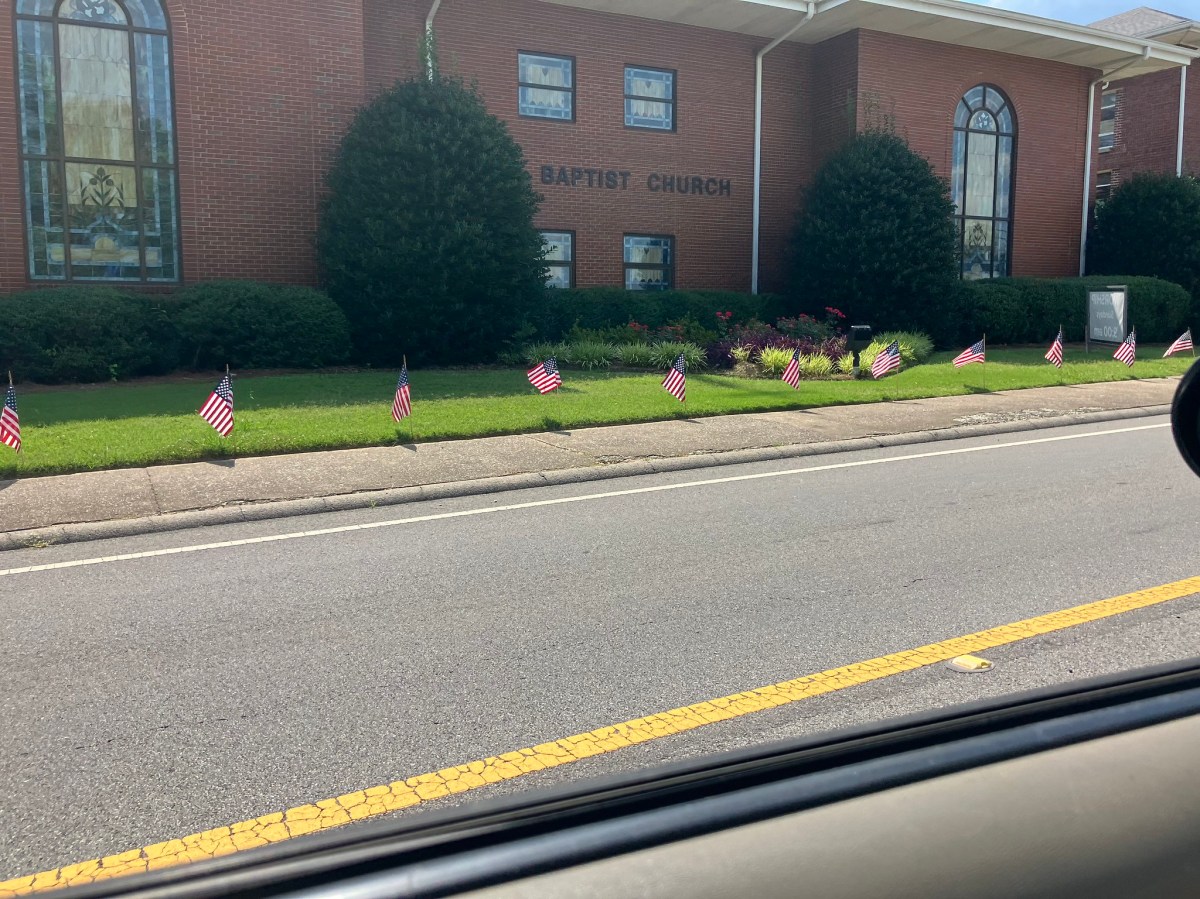
Yesterday, July 4th, I rode by First Baptist Church of Boaz and saw something that left me uneasy. Along the sidewalk, stretching across their front lawn, were dozens and dozens of tiny U.S. flags, each spaced out in a perfect, respectful row. It was clearly a tribute to America’s Independence Day — a show of patriotism. But in front of a church?

It struck me as a troubling symbol of how deeply certain forms of Christianity — especially Southern Baptist Fundamentalism — have tangled themselves up with nationalistic fervor. On the surface, maybe it looks harmless: honoring the nation, remembering veterans, celebrating the Fourth of July. But to me, those rows of flags waving proudly outside a place that claims to follow Jesus reveal something far more dangerous.

Let me be transparent. I do not believe Jesus was the supernatural Son of God described by Christian creeds. I do not believe He was divine, or that any divine being guided Him. And to be honest, I’m not even completely confident that Jesus the human, as described in the Gospels, actually existed. There may have been a historical teacher whose memory inspired the stories, but whether such a person truly lived is, for me, still an open question.

Still, if we work from the premise that someone named Jesus — a Galilean teacher — stood up against empire and religious hypocrisy, then what the Bible preserves about Him should at least partially represent a message that transcended nationalism. He proclaimed a kingdom “not of this world,” a movement that refused to be captured by flags or patriotic loyalty.

And that is exactly why this flag-lined church lawn is so disorienting. It seems to me that any honest reading of the New Testament would find a Jesus who taught about a kingdom beyond empires, militaries, or national symbols.

So why, then, do so many Southern Baptist churches embrace American flags as if they were sacred objects? Why conflate “God” with “country” so uncritically?

In my view, it comes down to comfort, nostalgia, and a need for belonging. If the church can wrap the cross in the stars and stripes, it doesn’t have to confront what Jesus (real or not) is said to have taught. It can claim to follow a crucified peasant from Galilee while at the same time feeling like it is on the winning team of history. It can baptize its political identity in religious language, and that feels safe.

But that is not Christianity, at least not in any sense that takes even the idea of Jesus seriously. That is civil religion — a convenient way to merge faith with patriotic sentiment, while ignoring any challenge to empire, power, and violence.

To me, those flags in front of First Baptist Boaz reveal what has gone wrong with so much American religion. The message is subtle but unmistakable: “You can have Jesus, but only if you pledge allegiance to this flag first.”

If there was ever a reason to question the fundamentalist version of Christianity, to pull back the layers and ask what really matters, this is it. I hope more people will pause, see those flags, and realize that maybe — just maybe — Jesus (if He even lived) would have walked right past them, still preaching a kingdom that had nothing to do with them at all.

Financial Reality: A Response to July 4th

This is part of my year-long series exploring human-centered alternatives to the spiritual promises in Oswald Chambers’ classic devotional My Utmost for His Highest. Today’s entry, “Don’t Calculate without God”, promises that believers who “bring God in as the greatest factor” in all calculations will avoid worry and have their plans succeed, claiming that trusting Jesus means you “can’t set aside for a rainy day” and that God will “make your righteous reward shine like the dawn.”

Here’s what calculating with God as the greatest factor actually delivered:


“Don’t calculate without God,” their church financial counselor advised earnestly. “Bring him in as the greatest factor in all your financial decisions. Trust completely—you can’t set aside for rainy days if you’re truly following Jesus. God will make your righteous reward shine when you commit your way to him.”

Lisa and Mark were drowning in credit card debt while facing an increasingly uncertain job market. But instead of practical financial planning, they were offered spiritual financial advice. Such faithful trust would surely trigger divine provision and economic blessing.

They took this guidance seriously. Instead of creating an emergency fund or reducing expenses, they continued tithing faithfully and avoided “calculating with evil in view” by planning for potential job loss or medical emergencies. Such preparation would demonstrate lack of trust in God’s provision.

They committed their financial way to the Lord and waited for divine blessing.

But the promised divine intervention was a financial catastrophe.

When Mark lost his job during company restructuring, they had zero emergency savings despite months of mounting financial stress. Their “righteous reward” didn’t shine like the dawn—instead, they faced eviction, crushing bills, destroyed credit. The calculations that excluded practical planning for difficulties proved financially disastrous.

Meanwhile, their neighbors Carlos and Elena approached financial uncertainty with zero expectation of divine provision. They didn’t expect God to replace careful planning. Carlos worked extra shifts while Elena took freelance projects, building an emergency fund covering six months of expenses. They reduced unnecessary spending and researched backup career options.

Carlos and Elena’s approach included “calculating with evil in view”—they planned for job loss, medical emergencies, economic downturns. Their financial decisions weren’t based on religious trust but on practical assessment of risks and preparation for contingencies.

When the same company layoffs affected Carlos, his family weathered the crisis successfully. Their emergency fund covered expenses while Carlos retrained for a different field. They didn’t need divine intervention because they’d prepared for exactly this scenario through human foresight and disciplined saving.

Where was God as the greatest factor in Lisa and Mark’s financial calculations? Where was the righteous reward that was supposed to shine like the dawn?

Lisa and Mark’s breakthrough came when they abandoned spiritual financial principles and started working with a secular financial advisor. Instead of trusting God to provide, they created realistic budgets, built emergency savings, planned for potential setbacks.

Their financial recovery came through human effort and practical planning, not divine blessing. The “righteous reward” that actually helped was Carlos and Elena’s emergency fund and backup plans—created through human wisdom, not spiritual trust.

The silence where God’s provision was supposed to manifest revealed the truth: there was no divine factor that could replace practical financial planning. Only human preparation and realistic risk assessment that actually protected families during economic uncertainty.


Reflection Question: When has practical financial planning been more reliable than trusting divine provision for economic security?


This story is part of my upcoming book “The Undevoted: Daily Departures from Divine Dependence,” which offers 365 human-centered alternatives to the spiritual certainties in Chambers’ devotional. Each day explores how reason, community, and human resilience can address life’s challenges without requiring divine intervention.

Productive Concern: A Response to July 5th

This is part of my year-long series exploring human-centered alternatives to the spiritual promises in Oswald Chambers’ classic devotional My Utmost for His Highest. Today’s entry, “One of God’s Great Don’ts”, promises that believers can achieve a disposition that makes worrying impossible through “perfect confidence in the Father,” claiming that fretting is “wicked” for Christians and that taking God “into calculations as the biggest factor” eliminates anxiety even during crises.

Here’s what trying to eliminate worry through spiritual confidence actually delivered:


“Worry is wicked for believers,” her prayer group leader insisted firmly. “You need to rest in the Lord with perfect confidence. Deliberately tell God you won’t worry. Take him into your calculations as the biggest factor, and your disposition won’t allow anxiety.”

Maria’s seventeen-year-old son Diego had just been diagnosed with Type 1 diabetes. The learning curve was terrifying—carb counting, insulin ratios, blood sugar monitoring, recognizing symptoms of dangerous highs and lows. But instead of embracing this necessary concern, Maria was told her maternal anxiety was spiritual failure.

She tried desperately to achieve the promised worry-free state. When anxious about Diego’s blood sugar management, she confessed it as sin and commanded herself to rest in the Lord. When she worried about his future complications, she prayed to stop fretting and trust God’s sovereignty.

Surely perfect confidence in the Father would eliminate her maternal anxiety.

But the promised spiritual serenity was completely unreachable when her child’s life was literally at stake.

Maria’s worry intensified despite constant prayer and self-rebuke. When Diego had severe hypoglycemic episodes, her fear was overwhelming regardless of spiritual efforts. The disposition that supposedly wouldn’t allow worry felt like cruel religious fantasy when facing real medical emergencies.

Meanwhile, her friend Carmen approached her daughter’s chronic illness with zero expectation of divine worry-elimination. When Carmen’s daughter was diagnosed with juvenile arthritis, Carmen didn’t try to achieve worry-free disposition through spiritual confidence.

Instead, Carmen educated herself thoroughly about the condition, connected with other parents through support groups, worked closely with medical specialists. Her approach wasn’t about eliminating anxiety but channeling concern into productive action. She worried appropriately while taking concrete steps to ensure the best possible care.

When Diego experienced a dangerous diabetic emergency at school, Maria’s “perfect confidence in the Father” disintegrated completely. Her spiritual efforts to avoid fretting had prevented her from learning crucial diabetes management skills that could have prevented the crisis.

Carmen’s supposedly “wicked” worry had prepared her to handle her daughter’s medical needs competently.

Where was the perfect confidence that was supposed to make worrying impossible? Where was God as the biggest factor eliminating anxiety during medical crises?

Maria’s breakthrough came when she stopped trying to eliminate worry through spiritual discipline and started using maternal concern constructively. She took diabetes education classes, learned to interpret blood glucose data, connected with other diabetes families for practical support.

The peace that actually helped came not from resting in the Lord but from becoming competent in diabetes management. Her worry transformed from spiritual failure into parental wisdom when directed toward practical preparation and medical education.

The silence where God’s perfect confidence was supposed to replace anxiety revealed the truth: there was no divine factor that could eliminate appropriate parental concern about a child’s serious medical condition. Only human competence and community support that actually protected her son’s health.


Reflection Question: When has channeling worry into productive action been more helpful than trying to eliminate anxiety through spiritual confidence?


This story is part of my upcoming book “The Undevoted: Daily Departures from Divine Dependence,” which offers 365 human-centered alternatives to the spiritual certainties in Chambers’ devotional. Each day explores how reason, community, and human resilience can address life’s challenges without requiring divine intervention.