The God Question

Great Gladness or Great Guilt?–A Closer Look At Beulah Baptist’s May 5, 2025 Sermon

📍 About Sunday Specials

Every week across the South, churchgoers hear sermons that shape how they think about truth, morality, and meaning. Our Sunday Specials take a closer look—analyzing real messages preached in real pulpits right here in Boaz, Alabama. Using The God Question’s Core Philosophy—which values evidence, reason, historical awareness, and emotional integrity—we critically examine the theology, logic, and emotional impact of what’s being taught.

These are the messages shaping minds. We think they deserve to be questioned.


Sunday Special – May 5, 2025

Series: A Critical Lens on Local Sermons
Church: Beulah Baptist Church, Boaz, Alabama
Speaker: Pastor Tony Holcomb
Sermon Title: “Great Gladness”
Text: 1 Chronicles 29:10–22
Method: The God Question’s Core Philosophy


🙏 The Sermon in Summary

Pastor Tony Holcomb delivered a heartfelt message centered on the phrase “great gladness,” drawn from King David’s worship at the end of his reign. The core idea was that genuine joy comes from genuine worship—worship that springs from humility, conversion, and total surrender to God. Throughout the message, Pastor Holcomb emphasized that:

  • Everything belongs to God.
  • True worship is an act of the heart, not a routine.
  • Great gladness flows from recognizing God’s sovereignty and giving sacrificially in response.
  • Salvation is initiated entirely by God; human beings are incapable of seeking Him without divine intervention.
  • A “genuine conversion” will produce “genuine humility,” which leads to authentic worship and giving.

The sermon included anecdotes, emotional appeals, and references to tithing, stewardship, and upcoming capital campaigns at Beulah Baptist.


🧠 What’s the Problem?

Viewed through The God Question’s Core Philosophy—which prioritizes evidence, reason, and human dignity—this sermon reveals several theological and philosophical red flags:


🔍 Claim-by-Claim Critique

1. “God is always pleased with himself.” This anthropomorphic claim, repeated with confidence, reimagines God with human emotional states like self-satisfaction. It’s a curious assertion: a being who is “always happy” and “never frustrated” yet still demands worship. If God is so fulfilled, why does He need constant praise and offerings?

2. “We are strangers, sojourners, enemies of God.” Pastor Holcomb repeatedly reinforces the idea that human beings are naturally wicked, undeserving, and alien to God. This messaging primes listeners to feel unworthy, making them more susceptible to accepting harsh doctrines. Framing people as “enemies” of God unless they’re born again is not just spiritually manipulative—it’s psychologically damaging.

3. “Genuine worship requires genuine humility, which requires genuine conversion.” Translation: If you’re not a Christian in the precise mold defined here, your worship doesn’t count. This is theological gatekeeping—salvation and joy are claimed to be conditional, available only to those who submit to a very specific belief system.

4. “You can’t do anything to be saved—God must do it all.” This view strips people of agency. It redefines justice as arbitrary divine selection. If you’re saved, it’s because God picked you. If you’re not, He didn’t. There’s no moral clarity in this—only fatalism and guilt.

5. “The tithe is outdated—but give even more.” After dismissing Old Testament tithing as irrelevant under the New Covenant, Pastor Holcomb calls for even greater giving, described as “sacrificial” and “joyous.” This is a classic bait-and-switch. The law may be gone, but the obligation remains—only now it’s spiritualized and moralized.

6. “Everything is God’s—especially your money.” Repeated refrains that “everything is God’s anyway” create a theological framework where generosity is expected not as a choice, but as a duty. When paired with a capital campaign and plans for a new tabernacle, the spiritual message becomes entangled with a material one.

7. “You must be born again, or your humility is fake.” Pastor Holcomb asserts that non-Christians are incapable of true humility. This is a baseless and insulting claim. Millions of atheists, agnostics, Jews, Muslims, Hindus, and spiritual seekers demonstrate genuine humility every day. This doctrine promotes Christian supremacy by excluding others from basic human virtues.

8. “Worship is love—not obligation.” Ironically, after dozens of appeals to duty, sin, judgment, and unworthiness, we’re told love should be the motive. But if you don’t respond? Eternal separation awaits. That’s not love. That’s coercion disguised as compassion.


📣 Final Thoughts

This sermon, like many in the Bible Belt, wraps emotional storytelling, capital campaign momentum, and doctrinal fear in a single package. It’s inspiring on the surface—but beneath that surface lies a pattern:

  • You are broken.
  • God can fix you—but only if you submit.
  • If you don’t, it’s your fault.

This isn’t harmless inspiration. It’s theology that disempowers, divides, and devalues human reason and autonomy. Through that lens, “great gladness” starts to look more like “great guilt” covered in praise music.


🧭 The God Question’s Invitation

If you’ve heard sermons like this and walked away feeling small, unworthy, or afraid—pause. Ask why. Ask who benefits from a message that demands your humility but not your critical thinking.

You are not broken. You are not God’s enemy. You don’t need to be “converted” to find joy, humility, or purpose.

You need only begin asking questions. The right ones. And we’re here for that.
Is Religion Dying or Evolving?

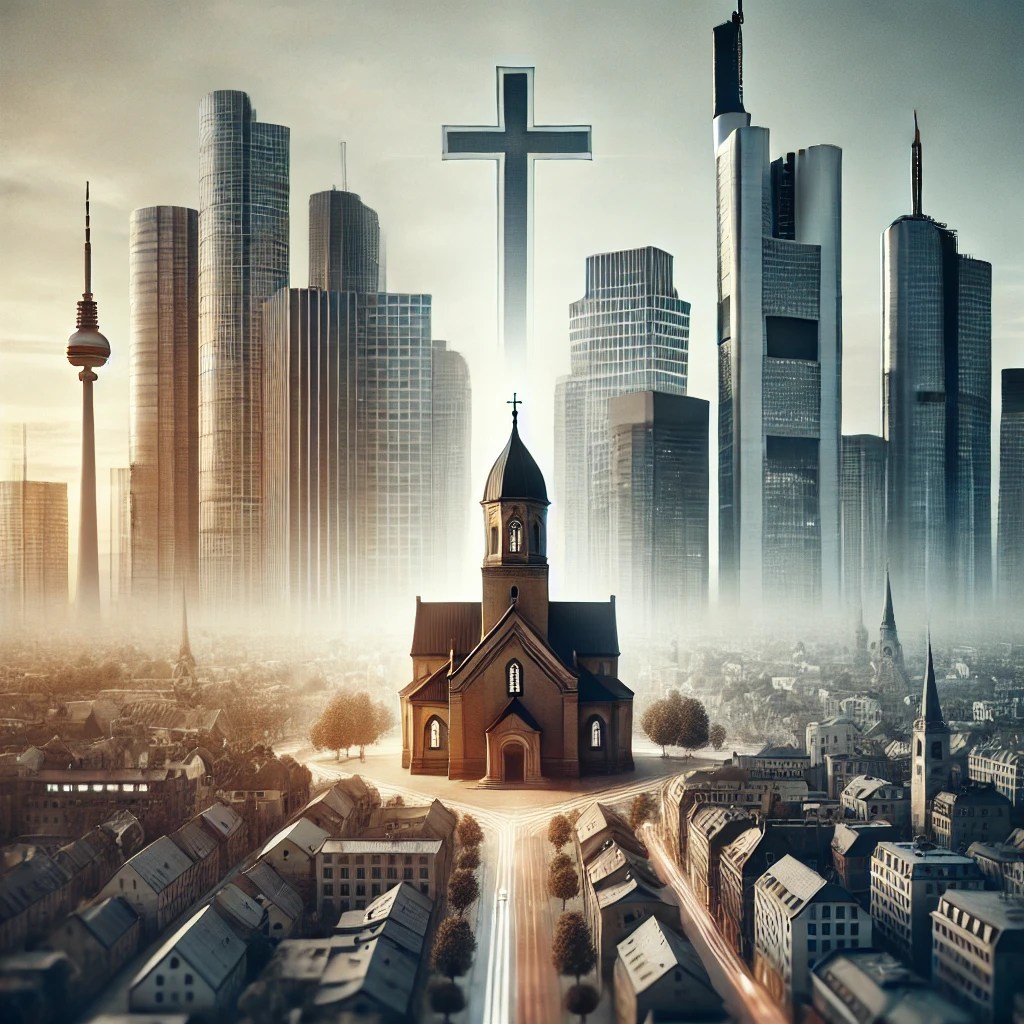
In the modern West, headlines regularly proclaim the “death of religion.” Pew Research, Gallup, and Barna surveys track the rising number of “nones”—those who identify with no religion. Church attendance has declined. Traditional doctrines are questioned. Even among professing believers, the enthusiasm for orthodoxy seems to be waning.

But is religion really dying?

Or is it evolving?

Let’s explore.


📉 The Decline of Traditional Religion

There’s no denying the numbers: in places like the U.S., Canada, and Europe, institutional religion is losing ground.

  • Church attendance is at historic lows.
  • Youth disaffiliation is accelerating.
  • Seminary enrollments are shrinking.
  • Pastoral burnout is surging.

Add to this the scandals, cover-ups, political entanglements, and doctrinal inflexibility that have left many questioning whether organized religion still serves the needs of real people in a real world.

But that’s only half the story.


🌱 The Rise of Spirituality and Hybrid Beliefs

While many are rejecting organized religion, they’re not rejecting meaning, purpose, or transcendence. In fact, millions are reimagining the spiritual quest on their own terms:

  • Mindfulness and meditation (often stripped of religious roots) are booming.
  • Spiritual-but-not-religious (SBNR) identifiers have exploded.
  • Interest in ancient wisdom, psychedelics, astrology, and Eastern philosophies continues to grow.
  • Interfaith dialogue, humanist communities, and progressive theologies are gaining traction.

What we’re witnessing may not be the death of religion, but the death of authoritarian, dogmatic religion—and the birth of something more human, flexible, and honest.


🧠 Evolution by Deconstruction

In biological terms, systems adapt or die. Religion is no different.

Many people today are going through faith deconstruction—not to destroy belief, but to evolve it. They are:

  • Letting go of fear-based doctrines.
  • Questioning literalist readings of ancient texts.
  • Replacing inherited guilt with critical inquiry.
  • Valuing ethics over orthodoxy.
  • Embracing community without creeds.

In this light, religion isn’t vanishing. It’s molting.

And like any molting creature, it looks messy in the process—but the goal is renewal.


🔍 What This Means for the Future

Will some religions die? Yes. Particularly those that refuse to adapt.

But the deeper human longings—connection, mystery, morality, hope—will remain. So too will our attempts to name and nurture them. What’s changing is the form:

  • Less hierarchy, more horizontal community.
  • Less dogma, more dialogue.
  • Less “you must believe,” more “let’s explore together.”

This is not a crisis. It’s a crossroads.


🧭 The God Question’s Invitation

We believe that belief should never require the suspension of thought.

That doubt is not the enemy of truth—but its companion.

And that religion, like every other human construct, must face the light of evidence, logic, and lived experience.

So ask yourself:

  • Is your faith expanding your mind—or shutting it down?
  • Is your spiritual community making room for questions—or punishing them?
  • Are you clinging to certainty—or growing in wonder?

Whether religion dies or evolves may depend on how bravely we ask—and live—the questions that matter.

What Happens When You Stop Praying?

“Prayer is when you talk to God. Meditation is when God talks to you.” — Anonymous

Or so the cliché goes. But what really happens when someone who has spent years—or a lifetime—praying suddenly… stops?

This post explores what doesn’t happen, what might happen, and what can happen when a person stops praying. Not from a theological stance—but through the lens of psychology, perception, and evidence-based reasoning.


❌ What Doesn’t Happen

First, let’s name what doesn’t happen:

  • Lightning doesn’t strike.
  • Your world doesn’t collapse.
  • God doesn’t “speak louder” out of concern for your silence.
  • Demons don’t show up to claim your soul.

In most cases, when people stop praying, nothing external happens at all. And that’s the first clue.

If prayer were a supernatural hotline to the divine—a lifeline tethering you to favor, protection, or purpose—its absence should be unmistakable. But for most former believers, silence is followed not by divine disapproval, but by… more silence.


🧠 The Psychology of Prayer

Prayer is deeply powerful—but not in the way most believers think. Its power lies in the psychological benefits it provides:

  • Emotional regulation through ritual and routine
  • Cognitive reframing when expressing gratitude or confessing guilt
  • Stress reduction similar to meditation or mindfulness
  • Perceived control in uncontrollable situations

In short, prayer is a self-directed psychological mechanism that mimics external communication. But it’s internal. And it works—not because someone is listening—but because you are.

So when someone stops praying, they don’t lose “access to God.” They lose a coping habit. But habits can be replaced—and often with healthier, evidence-based practices like journaling, therapy, meditation, or purposeful silence.


👀 What Can Happen: A Clearer View of Reality

When the ritual of prayer fades, something else often rises: clarity.

Without prayer acting as a buffer between thought and reality, ex-believers report feeling:

  • More intellectually honest
  • More emotionally grounded
  • More responsive to real-world solutions
  • Less reliant on magical thinking

You stop attributing coincidences to divine intervention. You start recognizing your own agency. The credit (and blame) for your actions becomes yours. That’s uncomfortable at first—but empowering long-term.

And then there’s this: Without the pressure to hear from God, you become more attuned to your own mind. You start asking better questions—and listening for real answers.


🙏 But Didn’t Prayer Change My Life?

Many deconverted believers hesitate to let go of prayer completely because of one haunting truth: It helped. And that’s valid.

Prayer does change lives—because the act of focused intention changes lives. So do mantras, self-talk, breathwork, gratitude journaling, and a dozen other “secular prayers.” You don’t need to abandon the benefits of prayer—only the theology that claims exclusive credit.


🧩 Final Thought

When you stop praying, you don’t lose a connection to God. You lose a layer of self-deception—and gain access to the full complexity of your own mind.

And maybe, just maybe, that’s where your real self was hiding all along.


A Closer Look at Sardis Baptist’s Easter Sermon

What Are Sunday Specials?

Every Sunday, we take a closer look at a sermon preached in a local church—usually right here in the American South, where religion saturates culture and identity. These aren’t distant hypotheticals or abstract doctrines. They’re real messages, delivered this week, to real people. Our goal isn’t mockery or hostility—it’s clarity.

We apply The God Question’s Core Philosophy: evidence over assumption, logic over tradition, and clarity over emotional manipulation. We listen closely so we can think critically—and help others do the same.


Date Analyzed: April 13, 2025 (Palm Sunday)

Speaker: Pastor Mike Goforth

Church: Sardis Baptist Church, Boaz, Alabama

Series: Sunday Specials – A Critical Lens on Local Sermons

Method Applied: The God Question’s Core Philosophy


🎙 The Sermon in Summary

Pastor Mike Goforth delivered a Palm Sunday sermon titled “The Easter Parade,” drawing from Ephesians 4:17–24. He used the metaphor of “putting on new clothes” to illustrate what it means to become a Christian—contrasting the “old man” (non-believer) with the “new man” (born-again believer). The message celebrated the resurrection of Jesus, emphasized substitutionary atonement, and described the moral failings of those outside the Christian faith. It ended with an altar call, inviting listeners to “put off the old man” and join the family of God.


🧠 What’s the Problem?

While the sermon was passionate, rhetorically smooth, and aligned with traditional evangelical teaching, it raises serious concerns when viewed through the lens of The God Question’s Core Philosophy—a method that values evidence, logic, historical awareness, and emotional integrity over inherited dogma.


🔍 Claim-by-Claim Critique

1. Jesus died for our sins.

This foundational claim assumes a divine economy where sin is a transferable debt and blood is the only acceptable payment. But this view of justice would be ethically outrageous in any secular context. The notion that one person can be punished for another’s wrongdoing isn’t just illogical—it’s morally troubling.

2. Jesus rose from the dead.

The resurrection is framed as historical fact, yet the sermon provides no evidence beyond personal belief. The Gospel accounts of the resurrection are contradictory, and Paul—our earliest source—never mentions an empty tomb. Without independent corroboration, this claim rests on circular reasoning.

3. The tomb is empty.

Again, asserted as fact but supported only by internal Christian texts. An empty tomb, even if verified, wouldn’t prove a resurrection—it would raise more questions than it answers.

4. Salvation requires a combination of intellectual belief and heartfelt trust.

This framing subtly blames nonbelievers: if you don’t accept Christianity, it’s because you either don’t understand it or don’t feel it deeply enough. It’s an immunized argument, closed off from honest challenge.

5. Nonbelievers are blind, hardened, perverted, greedy.

This is not description—it’s demonization. The “old man” is painted in disturbingly dehumanizing terms. Apparently, if you’re not born again, your mind lacks perception, your heart is like stone, your soul is perverse, and your lusts are uncontrollable.

But is that true? Millions of thoughtful, moral, generous people reject Christianity—not because they’re blind or broken, but because they’ve critically evaluated the evidence and found it lacking.

6. Believers are honest, generous, self-controlled, and aware of sin.

These are admirable traits, but they are not exclusive to Christians. Suggesting otherwise creates a moral superiority complex. Plenty of believers fall short, and plenty of nonbelievers live principled, compassionate lives.

7. Eternal separation from God awaits the unsaved.

This is classic fear-based theology. The threat of eternal punishment is held over the listener’s head as the cost of doubt. This is emotional coercion disguised as spiritual invitation.

8. Hearts are harder on Sand Mountain than in foreign countries.

This statement reflects a colonial mindset: locals have rejected the gospel too many times and are now spiritually calloused, but “untouched” people elsewhere are more receptive. It’s the same logic used by missionaries for centuries to justify invading cultures and undermining native worldviews.


🧱 What This Reveals

Pastor Goforth’s sermon isn’t just a celebration of Easter—it’s a well-oiled delivery of evangelical fundamentals, complete with insider language, guilt-based motivations, and fear-driven appeals. When stripped of its emotional packaging, we’re left with a theology that:

  • Punishes unbelief more than it rewards reason
  • Exalts faith over facts
  • Uses metaphor to manipulate (e.g., “old clothes,” “hardened heart”)
  • Divides humanity into saved and lost, righteous and reprobate

📣 Final Thoughts

This sermon is a perfect example of why critical thinking about religion is essential—especially in places where it dominates cultural identity. If you heard this message and felt uncomfortable questioning it, that’s no accident. It wasn’t designed to be questioned. It was designed to be believed.

But belief without evidence is not a virtue. And doubt, when paired with reason, is not a weakness. It is the beginning of clarity.


🧭 The God Question’s Invitation

If you’ve grown up hearing messages like this—messages that define you as lost, unworthy, or broken unless you accept a specific belief system—we invite you to pause. Think. Examine. Not just what you’ve been told, but why you were told it.

You are not broken for asking questions. You’re brave.

Let’s keep asking.

The Evolution of Morality: Why Humans Are Good Without God

Is it possible to be good without God? For many believers, the answer is an automatic “no.” The argument goes like this: Without a divine lawgiver, there can be no objective standard of right and wrong—only shifting preferences and moral chaos. If God doesn’t exist, then “anything goes.”

But reality tells a different story.

🧬 Morality Isn’t Handed Down—It Evolved

Long before organized religion, early humans lived in cooperative groups. Those who shared food, cared for the sick, and punished cheaters were more likely to survive and reproduce. These behaviors—altruism, empathy, fairness—are not divine mandates but evolutionary advantages.

In fact, primates like chimpanzees and bonobos exhibit basic moral behaviors: they reconcile after fights, help others in distress, and protest unfairness. Morality, then, is older than scripture. It’s baked into our biology.

🤝 The Real Roots of Right and Wrong

We don’t need to read Leviticus to know that murder is wrong or kindness is good. Moral instincts are rooted in human empathy and cultural evolution. Over time, societies refined moral codes—not through divine revelation, but through trial and error.

Ask yourself: Do we need the threat of hell to avoid hurting others? Or do we avoid it because we feel the suffering of another person—and because stable, fair societies benefit everyone?

If belief in God were required for morality, then nonbelievers (atheists, agnostics, the “nones”) should be rampaging the streets. But countless studies show otherwise: Secular societies consistently rank higher in measures of human well-being, peace, and social trust.

🔍 If Religion Created Morality…

Then why do so many religions sanction slavery, genocide, and the subjugation of women? Why did morality evolve past scripture—outgrowing its tribal, violent, and sexist roots?

Modern values—human rights, gender equality, LGBTQ+ dignity, racial justice—have flourished not because of religion, but often in spite of it. They are the product of reason, dialogue, and the widening circle of empathy.

📜 Morality Without Myth

A god who must command you not to murder or steal is not making you moral—he’s threatening you into submission. Genuine morality arises when we do what’s right even when no one is watching.

If your goodness depends on divine surveillance or the promise of paradise, what does that say about the source of your morality?

We are good—not because we fear God, but because we care about each other.


Losing Faith, Gaining Freedom: My Deconversion Story


“I didn’t stop believing because I wanted to sin. I stopped believing because I started asking better questions.”

For years, I was immersed in a belief system that promised certainty, salvation, and community. It answered all the big questions—where we came from, what we’re here for, and what happens when we die. But eventually, those neat answers began to feel like tightly sealed boxes, not doors to discovery. The more I studied, questioned, and listened—especially to the small, persistent voice of doubt—the more I realized my faith was built on fear, tradition, and emotional manipulation, not truth.

This is my deconversion story.


The Questions That Wouldn’t Go Away

It didn’t begin with rebellion. It began with sincerity. With Bible reading. With prayer. I wanted to understand God better. But I kept encountering contradictions—within the Bible itself, between the character of God and the horrors of hell, between what I was told to believe and what I knew deep down was moral and just.

The resurrection, I was told, was the ultimate proof. But I came to realize that it wasn’t. The “evidence” was weak. The emotional pressure to believe was strong. And the cost of asking hard questions was often isolation and judgment.

What kind of truth needs to be propped up by fear of hell?


A God Too Small

I believed in a God who demanded blood to forgive, who created people knowing most would suffer eternally, who answered some prayers but not others—and we were never allowed to ask why. Any doubt was labeled as rebellion. Any critique, as pride. But the God I was supposed to worship felt more like a cosmic tyrant than a loving father.

My deconstruction was slow, layered, and painful. But when I finally let go of the idea that the Bible was inerrant—that was the turning point. The house of cards began to fall. And I didn’t crumble with it. I grew.


What I Found Instead

When I stopped clinging to faith, I didn’t become lost. I became more grounded. More human. More empathetic. I discovered wonder not in dogma but in reality—in science, in philosophy, in the beauty of questions without tidy answers. I stopped fearing hell and started loving life.

And here’s what surprised me most: the world didn’t become darker. It became brighter. I didn’t lose meaning—I began to build my own.


If You’re Deconstructing

You’re not alone. Millions of people are questioning their faith—especially those raised in high-control religious environments like Southern Baptist fundamentalism. Deconstruction isn’t rebellion. It’s growth. It’s an act of courage. And walking away from belief doesn’t mean walking away from morality, wonder, or purpose. It often means reclaiming them.


📺 For Further Exploration:

A moving, funny, and deeply honest account of one woman’s deconversion journey.


🧠 Thought to Ponder: If you were born in a different country, to different parents, would you still believe what you do now? If not, what does that say about your faith?

Trusting God Even When It Doesn’t Make Sense?

Sunday Special Feature


At The God Question, we’ve launched a special series that responds to real-world religious messages—statements, sermons, and claims being made from pulpits and platforms across the country.

Why? Because these messages shape minds. They influence how people understand suffering, morality, identity, and truth.

This week, we’re examining a sermon titled “Trusting God Even When It Doesn’t Make Sense,” delivered on March 23, 2025, by a pastor from First Baptist Church in Boaz, Alabama.


🔹 Core Message of the Sermon:

  • Life is often painful.
  • We may not understand what God is doing, but we should trust Him anyway.
  • God is always “working behind the scenes.”
  • Trials and suffering have a divine purpose.
  • Worship and faith are the proper responses, even in despair.

🎯 The God Question Responds:

Using our core philosophy—truth-seeking through reason, evidence, and skepticism—we challenge the claims made in this sermon.


🧩 Claim 1: “God is still good even when life is hard.”

This is an emotionally appealing idea, but it lacks evidence. It assumes that suffering and divine love can coexist without contradiction, but offers no objective support for this reconciliation.

Would we call a human parent “good” if they watched their child suffer needlessly and did nothing—perhaps to “build character”?


🧩 Claim 2: “God is working behind the scenes.”

This is a non-falsifiable claim. In other words, it cannot be tested or disproven—and that makes it unreliable as truth. Believers often interpret any outcome as part of God’s invisible plan.

This is classic confirmation bias: interpreting all events as evidence of divine involvement—regardless of the outcome.


🧩 Claim 3: “Pain has a purpose; trials grow our faith.”

Some people do grow through hardship. Others collapse under it. Many abandon their faith in the face of intense suffering.

So which is it—evidence of God’s hand, or randomness of life?

If suffering grows faith, what about those who lose faith because of suffering?


🧩 Claim 4: “Worship through the pain.”

Worship can be emotionally soothing—but when paired with the idea that suffering is divinely intended, it becomes a tool for normalizing spiritual neglect.

Why praise a God whose presence is indistinguishable from absence?

If help never comes—just silence—what are we really worshiping?


💬 Why This Matters:

This message was delivered to a local congregation, including young minds who are absorbing ideas about God, truth, and how to make sense of a painful world.

We don’t question anyone’s sincerity. But sincerity isn’t the same as truth.

These ideas deserve scrutiny—not because we want to destroy faith, but because critical thinking demands it.


🙋‍♀️ Ask Yourself:

  • If God is real, all-knowing, and all-loving, why is suffering still necessary?
  • Wouldn’t a powerful God have better tools for growth than trauma?
  • If we don’t understand God’s plan, how can we be so sure there is one?

🧠 The God Question Perspective:

Faith is not a substitute for truth. And when a message tells you to trust blindly—even when it doesn’t make sense—that’s a red flag.

We challenge you to question, think, and explore.

That’s the path to truth.

How to Spot Logical Fallacies in Religious Debates

When someone makes a bold religious claim—especially one involving supernatural events, eternal rewards or punishments, or divine authority—it can be difficult to know how to respond. The language is often emotional. The audience is expected to accept things on faith. And the pressure to conform can be overwhelming.

But there is one powerful tool we can all learn to use: logic.

If you want to evaluate religious claims with a clear mind, start by learning how to spot logical fallacies—errors in reasoning that can mislead even the most intelligent among us. Today, we’ll explore some of the most common fallacies found in religious debates, and how to recognize them in action.


🚩 1. Appeal to Authority

Fallacy: “The Bible says it, so it must be true.”
Why it fails: Just because a source claims authority doesn’t mean it’s reliable. All ancient texts—including religious ones—must be evaluated on historical, logical, and evidentiary grounds. The claim that a book is divine cannot be the evidence for its divinity.

🔎 Ask this instead: What objective evidence shows this authority is trustworthy?


🚩 2. Circular Reasoning

Fallacy: “Jesus must be God because the Bible says so, and the Bible must be true because Jesus is God.”
Why it fails: The argument relies on its own conclusion to prove itself—offering no independent evidence.

🔎 Ask this instead: Is there any way to test this claim without assuming it’s already true?


🚩 3. Appeal to Consequences

Fallacy: “If you don’t believe, you’ll go to Hell.”
Why it fails: Whether a belief has good or bad consequences has nothing to do with whether it’s true. Fear of punishment or hope of reward is a tool of emotional coercion—not rational argument.

🔎 Ask this instead: What does the actual evidence say about the claim, regardless of how it makes me feel?


🚩 4. False Dichotomy

Fallacy: “Either Jesus is Lord, or he was a liar or lunatic.”
Why it fails: This trilemma (popularized by C.S. Lewis) ignores many other possibilities—such as legend, exaggeration, or error in transmission over centuries.

🔎 Ask this instead: Are there more than two (or three) explanations for the evidence?


🚩 5. Burden of Proof Reversal

Fallacy: “You can’t prove God doesn’t exist, so He must.”
Why it fails: The person making the claim has the responsibility to prove it. If I claim there’s an invisible dragon in my garage, it’s not up to you to disprove it—it’s up to me to demonstrate it.

🔎 Ask this instead: What direct, falsifiable evidence supports this claim?


🧭 The Bottom Line

When religious beliefs are discussed, the bar for truth often gets lowered in the name of faith. But beliefs that shape lives, relationships, and public policy deserve just as much scrutiny as any other claim about the world.

By learning to spot logical fallacies, you gain clarity—and give yourself permission to ask better questions.

Debunking Pascal’s Wager: Why Betting on God Fails

👋 Welcome Back to The God Question
We’ve just completed our 20-Day Easter Special—a deep dive into Christianity’s central claim: the resurrection of Jesus. If you joined us for that journey, thank you for thinking critically with us. If you missed it, the full series is available in our archives.

Today, we return to our regular rotation of posts, cycling through our 11 core categories—starting with a timeless favorite: debunking Pascal’s Wager.

Let’s keep asking.


🎲 What Is Pascal’s Wager?

Blaise Pascal, the 17th-century French mathematician and Christian apologist, proposed a now-famous argument:

If God exists and you believe, you gain eternal life.
If God doesn’t exist and you believe, you lose nothing.
If God exists and you don’t believe, you lose everything.
Therefore, the rational choice is to believe—just in case.

It’s not a proof of God. It’s a wager—a pragmatic bet on belief as a risk-averse strategy.

The simplicity is seductive. But under scrutiny, Pascal’s Wager collapses.

Let’s examine it using The God Question’s Core Philosophy:

  1. Does the claim rely on evidence or belief?
  2. Are alternative explanations considered?
  3. Is there independent corroboration?
  4. Is the claim falsifiable?
  5. Does the explanation raise more questions than it answers?

1. 🔍 Belief Without Evidence

Pascal’s Wager doesn’t argue that God exists. It argues that belief is the safest gamble.

But rational belief requires evidence, not mere risk assessment. Would you bet your life on a vague threat of hell from any other religion?

Belief without evidence isn’t noble—it’s surrender.

And belief, by its nature, can’t be faked. If you don’t believe in your bones, God (if he exists) would know you’re bluffing.


2. 🔁 False Dichotomy

Pascal presents a binary choice: Christianity or atheism. But that’s intellectually dishonest.

What about Islam? Hinduism? Norse gods? Deism? Reincarnation?

There are thousands of possible gods, each with different rules, punishments, and promises. Betting on one might mean offending another.

The Wager doesn’t guide you toward truth. It traps you in fear.


3. 🔗 No Corroboration of Consequences

The Wager only works if the consequences it threatens—eternal reward or punishment—are real.

But:

  • There’s no evidence for heaven or hell.
  • There’s no documented survival of consciousness after death.
  • All afterlife accounts come from within religious traditions—not external, testable sources.

You can’t wager on stakes that aren’t demonstrably real.


4. ❌ Not Falsifiable

How would we know if Pascal’s Wager is wrong? We wouldn’t—because it’s not a testable claim. It doesn’t predict anything. It doesn’t risk being disproven.

Worse, it discourages doubt, inquiry, and courage by appealing to fear.

A wager that can’t be lost isn’t a rational argument. It’s a psychological manipulation.


5. ❓Raises More Questions Than It Answers

Pascal’s Wager doesn’t settle anything. It opens a floodgate:

  • Why would a just god reward fear-based belief?
  • Is belief really a choice? Can you will yourself to believe something you find implausible?
  • What kind of god values belief over evidence and compliance over honesty?

If eternal life depends on pretending to believe something you don’t, we’ve traded morality for fire insurance.


💡 Final Thought: Truth Over Terror

Pascal’s Wager thrives in uncertainty. But the honest seeker doesn’t wager—they investigate.

If there’s a god worth believing in, that god would reward truthfulness, not hedging.

Belief should follow evidence—not fear. And if a god punishes doubt more than dishonesty, that god isn’t worthy of worship.


🧭 The God Question’s Invitation

Pascal told us to bet.

We say: ask. test. follow the truth.

That’s how belief becomes meaningful—or how it gets left behind.

Let’s keep asking.

Why the Resurrection Never Happened — And Why That Matters

📅 Today is Day 20 of The 20-Day Easter Special

🚨 Let’s Say It Plainly

After twenty days of scrutiny—comparing claims, dissecting texts, exploring psychology, history, theology, and myth—we’re ready to say what many suspect, and some already know:

The resurrection of Jesus never happened.

Not in the literal, physical, historical sense claimed by most Christians.

Not as an actual dead man walking out of a tomb in Roman-occupied Judea.

And not in any way that should command our moral allegiance, public policy, or existential loyalty.

Let’s break down why.


🧭 Reapplying The God Question’s Core Philosophy

  1. Does the resurrection claim rely on evidence or belief?
  2. Are alternative explanations considered?
  3. Is there independent corroboration?
  4. Is the claim falsifiable?
  5. Does the explanation raise more questions than it answers?

After applying these questions to every aspect of the Easter story, here’s what we found:


1. 🔍 It Relies on Belief, Not Evidence

There is no verifiable evidence that Jesus came back from the dead. All claims stem from internal Christian writings—none contemporary, none neutral, and none coherent.

  • No tomb confirmed.
  • No body found.
  • No names on eyewitness accounts.
  • No Roman records.
  • No Jewish documentation.

Belief fills the gaps—and then dares us to call that “faith.”


2. 🔁 Alternative Explanations Fit Better

Everything in the resurrection narrative has naturalistic explanations that are far more plausible:

  • Apparitions and visions? Common after traumatic death.
  • Empty tomb? A later legend.
  • Devotion despite death? So did followers of Osiris, Mithras, and countless others.

Christianity is not unique. It is a cultural remix of dying-and-rising myths, made palatable to Greco-Roman ears.


3. 🔗 No Independent Corroboration Exists

No outside historian mentions the resurrection until long after the supposed event. Even early Christian writings—Paul’s letters—say almost nothing about an empty tomb or physical sightings.

If a dead man truly rose and appeared to hundreds, it’s strange no one beyond the movement cared enough to mention it.


4. ❌ The Claim Is Unfalsifiable

The beauty of the resurrection myth (for the believer) is that it’s immune to failure:

  • Don’t find evidence? “Blessed are those who believe without seeing.”
  • Find contradictions? “Each account adds richness.”
  • Don’t feel God? “You must be hardened by sin.”

Nothing can prove it false—so nothing can prove it true.


5. ❓ It Creates More Confusion Than Clarity

A god-man must die to appease himself so he can forgive us for what he created us to be?

That’s not just illogical—it’s morally incoherent.

And it asks us to worship the system that created the pain.

The resurrection myth encourages passivity in the face of injustice (“Jesus will fix it in the next life”) and emotional manipulation (“He died for you—what will you do for him?”).

It demands surrender, not inquiry. Loyalty, not logic.


✊ Why It Matters

Some will say: “Even if it’s not true, the resurrection inspires hope.”

But false hope is not harmless:

  • It’s used to justify suffering (“your pain has purpose”).
  • It’s used to cover corruption (“don’t worry, God will judge in the end”).
  • It’s used to escape reality (“this life doesn’t matter as much as the next one”).

If the resurrection never happened, then we—humans—are responsible for building meaning, fixing injustice, and finding hope in one another.

And that’s not bad news.

That’s the beginning of honest, grounded, collective morality.


🧭 The God Question’s Final Invitation

The resurrection myth is beautiful, ancient, poetic—and false.

But that doesn’t leave us empty. It frees us.

It frees us to grieve without platitudes. It frees us to ask without shame. It frees us to love without fear. It frees us to build a better world—not because God will fix it, but because no one else will.

And that’s why truth matters.

Let’s keep asking. Let’s keep building.


📺 For Further Exploration

Video: The Resurrection: A Critical Examination of The Easter Story – Jonathan MS Pearce (Part 1)

Overview: In this in-depth discussion, philosopher and author Jonathan MS Pearce delves into his book The Resurrection: A Critical Examination of the Easter Story. He systematically analyzes the resurrection narratives, highlighting inconsistencies and exploring naturalistic explanations.


📅 Note: After we wrap up our 20-Day Easter Special on April 20, we’ll return to our regular schedule of posting three times a week:

  • Tuesdays & Fridays – our structured explorations through all 11 blog categories
  • Sundays – our Sunday Special Feature, where we critically respond to real-world religious claims in real time

We hope you’ll stay with us as we continue asking bold questions and applying reason to faith.